Dairy Relief Lactase Enzyme for Industrial Dairy Processing
B2B guide to lactase and dairy enzyme complex selection, dosing, pH, temperature, QC, COA/TDS/SDS, pilots, and cost-in-use.
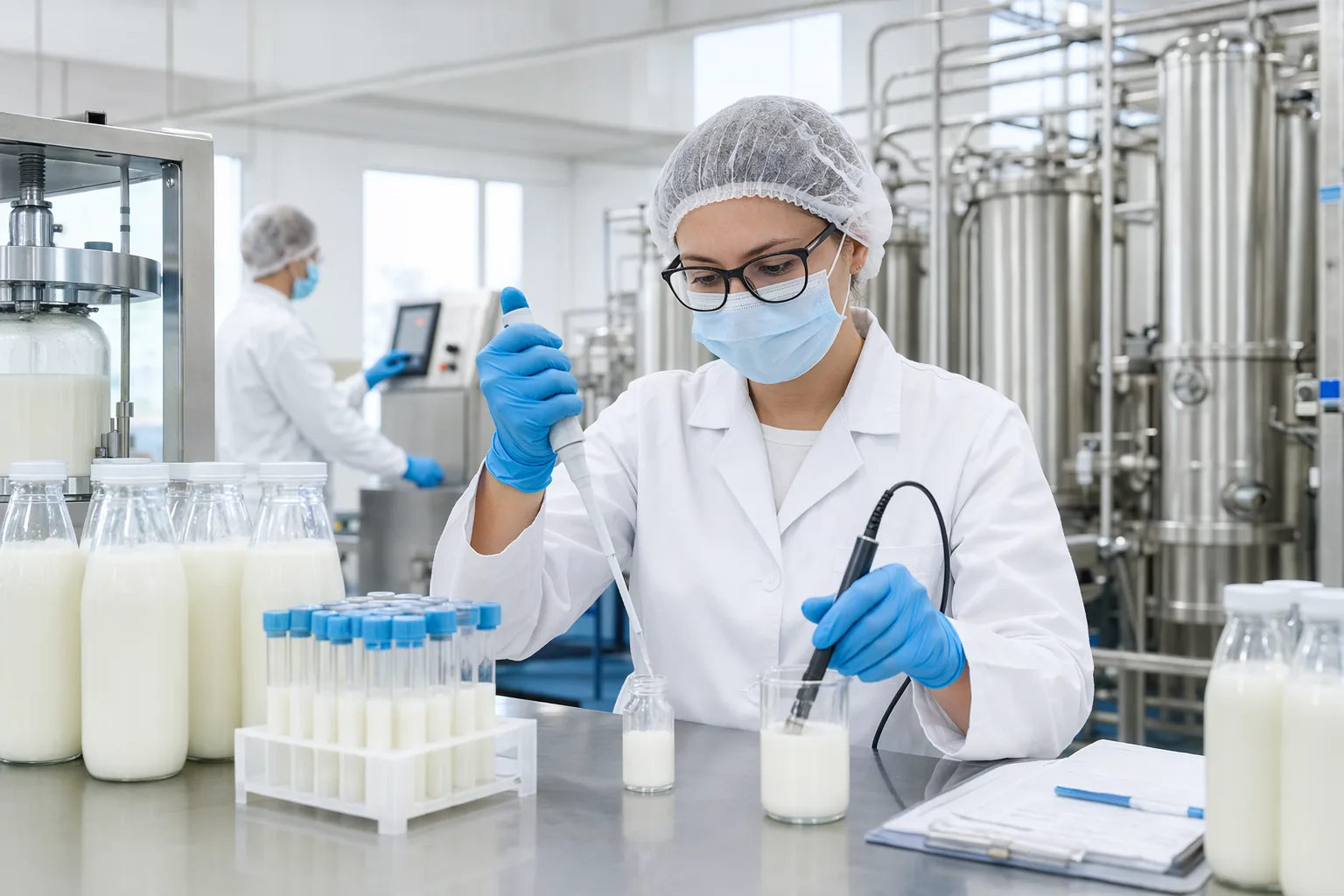
Troubleshoot lactose reduction, sweetness shift, viscosity, and yield by matching the right dairy enzyme complex to your milk, cheese, or yogurt process conditions. Dairy plants and ingredient resellers can request a quote at the end of this guide.
What “Dairy Relief Lactase Enzyme” Means in B2B Dairy
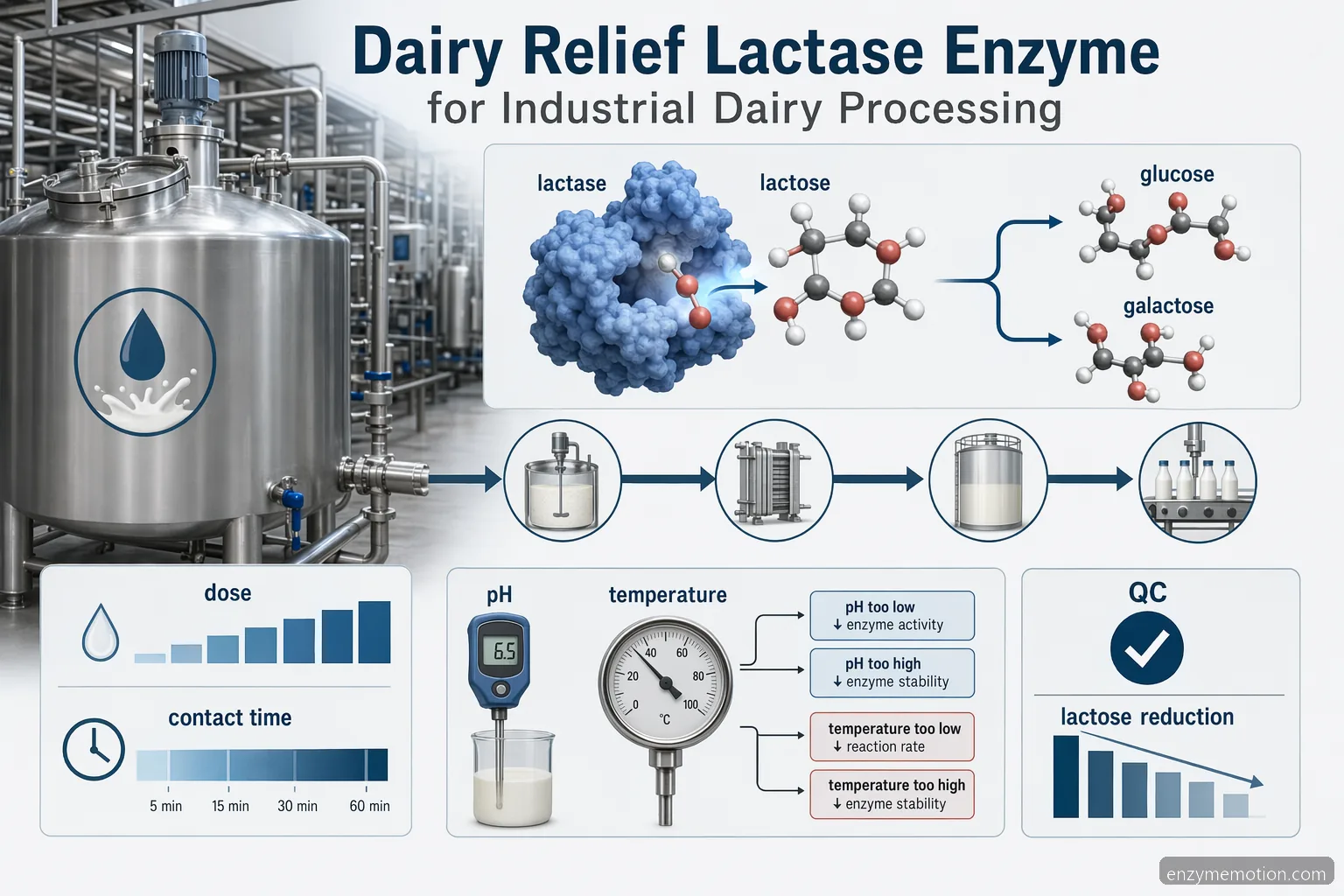
In consumer search language, dairy relief lactase enzyme often refers to digestive enzymes for dairy intolerance. For an industrial buyer, the same core enzyme function is used differently: lactase, also called beta-galactosidase, hydrolyzes lactose in milk streams into glucose and galactose before the finished product reaches the customer. This can support lactose-reduced milk, yogurt bases, ice cream mixes, cultured dairy, and selected cheese applications. It is not a medical supplement dosage question; it is a process-control question. The correct dairy enzyme must be selected by pH optimum, temperature window, activity unit definition, microbial source, purity profile, and compatibility with pasteurization, fermentation, homogenization, and storage. A dairy aid lactase enzyme for a plant environment should arrive with documented specifications, not just marketing claims. Buyers should compare TDS activity, COA lot results, SDS handling information, shelf-life conditions, and recommended use levels before pilot validation.
Use industrial activity units, not retail serving sizes. • Match enzyme grade to food processing requirements. • Validate in your actual milk solids, fat, and process sequence.
Dosage Bands and Contact Time for Milk Processing
A practical milk processing enzyme trial typically starts by defining the lactose reduction target, then screening dosage against residence time and temperature. As a starting framework, neutral lactase systems are often evaluated around pH 6.4-7.0 in milk, with cold processing at 4-10°C over extended holding or warmer treatment around 30-40°C for shorter reaction times. Because suppliers define activity units differently, dosage should be expressed against the TDS activity and confirmed by residual lactose testing rather than copied between products. Initial screening may compare low, medium, and high inclusion rates across the same batch of standardized milk, then calculate cost-in-use per metric ton and per percentage point of lactose reduction. If the process includes UHT or HTST heat treatment after hydrolysis, confirm whether heat inactivation is complete and whether browning risk changes due to increased reducing sugars.
Screen at least three dosage levels before scale-up. • Measure residual lactose rather than relying on time alone. • Check sweetness increase from glucose and galactose. • Include enzyme cost, holding time, and tank utilization in cost-in-use.
pH and Temperature Troubleshooting in Cheese and Yogurt
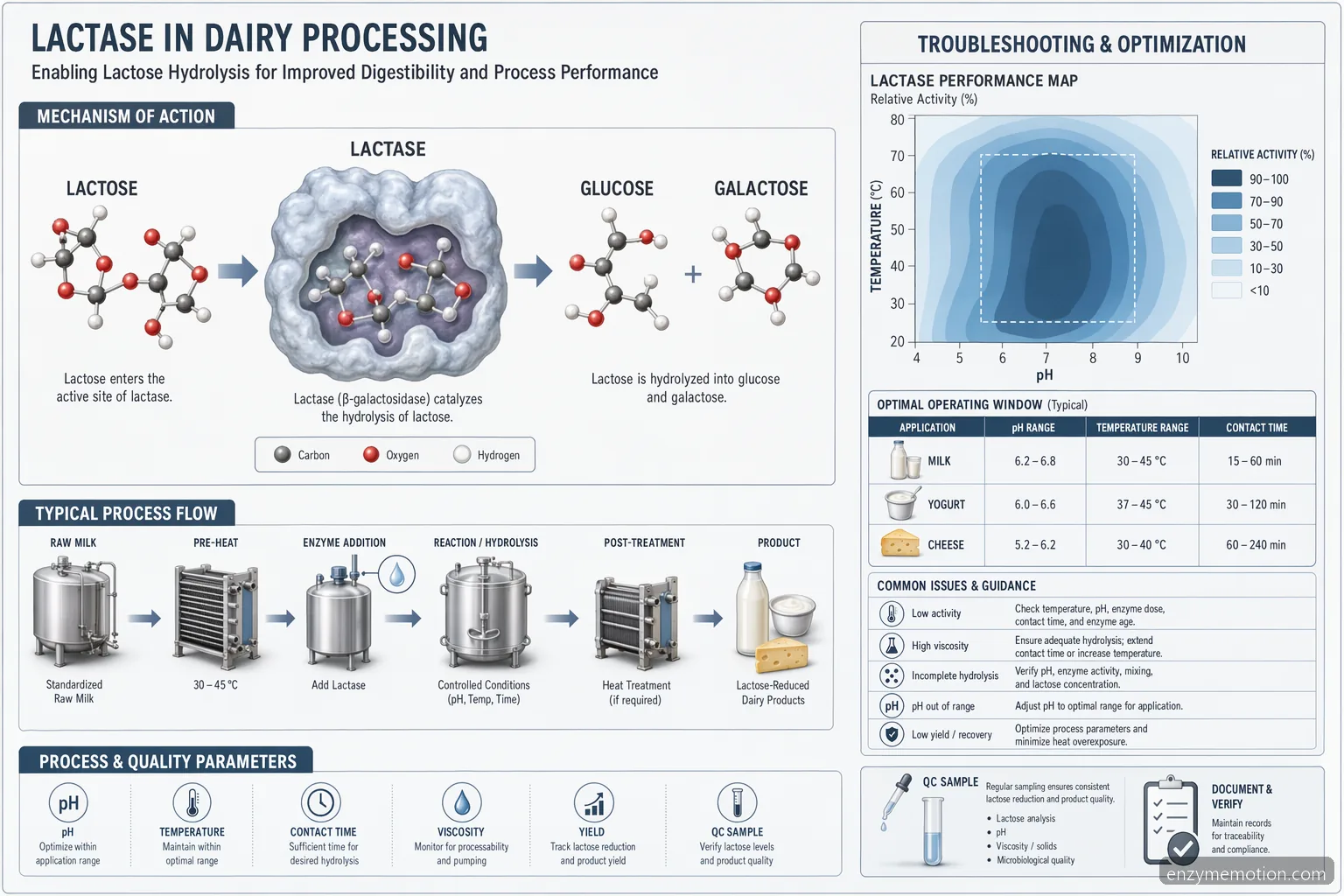
Cheese enzymes and yogurt enzymes encounter changing pH, salt, solids, and microbial activity, so lactase behavior can differ from fluid milk. In yogurt, lactase may be added before fermentation to hydrolyze lactose in the milk base, but acidification can move the system outside the optimum for some neutral enzymes. Acid-tolerant lactase may be more suitable when activity is needed in lower-pH environments, commonly around pH 4.0-5.5 depending on the product and supplier specification. In cheese, lactase can influence lactose availability, fermentation kinetics, residual sugar, browning during cooking, and flavor development. When a dairy enzyme complex includes lactase plus protease, lipase, or a rennet alternative, evaluate each activity separately. Do not assume one temperature optimum fits the whole complex. Run trials at the real process temperature, then confirm curd behavior, syneresis, moisture, pH curve, and sensory outcome.
Confirm enzyme activity at the actual fermentation pH. • Track pH curve and acidification rate in cultured dairy. • For cheese, monitor curd set, moisture, yield, and flavor. • Separate lactase effects from protease, lipase, or coagulant effects.
QC Checks for Consistent Lactose Reduction
The central QC question is not only whether lactase worked once, but whether it works predictably across lots, seasons, plants, and milk compositions. Recommended checks include incoming milk composition, starting lactose, pH, temperature log, enzyme lot number, dose, reaction time, residual lactose, glucose/galactose formation, microbiological status, and sensory review. HPLC, enzymatic lactose assays, or validated rapid methods may be used depending on plant capability and labeling needs. If the process is troubleshooting inconsistent performance, review enzyme storage temperature, thawing or mixing procedure, pump calibration, hold-tank stratification, sanitation residues, and whether the enzyme was added before or after heat steps. The common search question “can you take lactase enzyme after eating dairy” is not the right model for manufacturing: in processing, lactase must be dosed early enough to achieve the specified hydrolysis before release.
Audit dosing pumps and mixing uniformity. • Trend residual lactose by enzyme lot and milk source. • Verify storage conditions against the TDS. • Confirm cleaning chemicals are not deactivating enzyme residues in-line.
Supplier Qualification and Commercial Selection
A qualified dairy enzyme supplier should support technical, quality, regulatory, and commercial evaluation. Request a current TDS for activity definition, recommended pH and temperature range, dosage guidance, storage conditions, and shelf life. Review the COA for lot-specific activity and microbiological results, and use the SDS to confirm handling, PPE, spill, and storage requirements. Ask for allergen and composition statements where relevant to your market, but avoid relying on unsupported claims or invented certifications. During qualification, compare not just price per kilogram but cost-in-use: activity per unit cost, required dose, reaction time, tank occupancy, yield impact, rework reduction, label requirements, and stability in your process. A strong supplier will support pilot validation, scale-up calculations, retain samples, lot traceability, and documentation aligned with your internal food safety and procurement systems.
Request COA, TDS, SDS, and traceability documentation. • Compare enzyme activity and cost-in-use, not unit price alone. • Run pilot validation before commercial conversion. • Approve suppliers through QA, R&D, operations, and procurement.
Technical Buying Checklist
Buyer Questions
Lactase is necessary because lactose is a disaccharide that must be hydrolyzed into glucose and galactose before it is considered lactose-reduced. In industrial dairy, this is done in the milk or dairy base under controlled pH, temperature, dose, and contact time. The buyer’s focus is not consumer digestion advice, but predictable lactose conversion, quality control, labeling support, and process economics.
Digestive enzymes for dairy intolerance are usually described in consumer serving language, while industrial lactase is specified by activity units, process range, purity, documentation, and cost-in-use. A dairy plant should not scale from consumer tablets or retail references. Instead, compare food-processing enzyme TDS data, COA lot activity, SDS handling information, recommended dosage bands, pilot results, and supplier technical support.
That question is consumer medical territory and is not the right decision model for dairy processing. In manufacturing, lactase should be added at a validated process step with enough contact time to reach the lactose specification before packaging or release. Late addition may fail if temperature, pH, mixing, or residence time is insufficient. Pilot trials should define the latest acceptable dosing point.
Lactase targets lactose hydrolysis. A broader dairy enzyme complex may include lactase plus protease, lipase, coagulant, or other cheese enzymes depending on the application. Each enzyme activity can have a different pH optimum, temperature window, reaction rate, and quality impact. Buyers should evaluate each declared activity separately and confirm that the combined formulation supports the intended cheese, yogurt, or milk processing outcome.
Request the technical data sheet, certificate of analysis, safety data sheet, storage and shelf-life information, activity unit definition, composition statements relevant to your market, and lot traceability support. For commercial approval, also request pilot sample availability, recommended trial design, scale-up guidance, and cost-in-use inputs. Avoid relying on unsupported claims; use documented performance and quality records for supplier qualification.
Related Search Themes
digestive enzymes for dairy intolerance, cvs dairy relief lactase enzyme, why is the enzyme lactase necessary to digest dairy products, lactase enzyme lactaid or dairy ease, dairy aid lactase enzyme, can you take lactase enzyme after eating dairy
Dairy Enzyme Complex for Research & Industry
Need Dairy Enzyme Complex for your lab or production process?
ISO 9001 certified · Food-grade & research-grade · Ships to 80+ countries
Frequently Asked Questions
Why is the enzyme lactase necessary to digest dairy products in processing terms?
Lactase is necessary because lactose is a disaccharide that must be hydrolyzed into glucose and galactose before it is considered lactose-reduced. In industrial dairy, this is done in the milk or dairy base under controlled pH, temperature, dose, and contact time. The buyer’s focus is not consumer digestion advice, but predictable lactose conversion, quality control, labeling support, and process economics.
How should a plant compare digestive enzymes for dairy intolerance with industrial lactase?
Digestive enzymes for dairy intolerance are usually described in consumer serving language, while industrial lactase is specified by activity units, process range, purity, documentation, and cost-in-use. A dairy plant should not scale from consumer tablets or retail references. Instead, compare food-processing enzyme TDS data, COA lot activity, SDS handling information, recommended dosage bands, pilot results, and supplier technical support.
Can you take lactase enzyme after eating dairy, and does that apply to manufacturing?
That question is consumer medical territory and is not the right decision model for dairy processing. In manufacturing, lactase should be added at a validated process step with enough contact time to reach the lactose specification before packaging or release. Late addition may fail if temperature, pH, mixing, or residence time is insufficient. Pilot trials should define the latest acceptable dosing point.
What is the difference between lactase and a broader dairy enzyme complex?
Lactase targets lactose hydrolysis. A broader dairy enzyme complex may include lactase plus protease, lipase, coagulant, or other cheese enzymes depending on the application. Each enzyme activity can have a different pH optimum, temperature window, reaction rate, and quality impact. Buyers should evaluate each declared activity separately and confirm that the combined formulation supports the intended cheese, yogurt, or milk processing outcome.
What documents should be requested before qualifying a dairy enzyme supplier?
Request the technical data sheet, certificate of analysis, safety data sheet, storage and shelf-life information, activity unit definition, composition statements relevant to your market, and lot traceability support. For commercial approval, also request pilot sample availability, recommended trial design, scale-up guidance, and cost-in-use inputs. Avoid relying on unsupported claims; use documented performance and quality records for supplier qualification.
Wholesale and bulk supply: request a quote
Turn This Guide Into a Supplier Brief Request a dairy enzyme complex review with COA/TDS/SDS documentation, pilot-trial guidance, and cost-in-use support for your milk, yogurt, or cheese process. Wholesale and bulk supply for dairy manufacturers, ingredient plants and resellers: send the product, the application, the quantity (per order or per month), the pack size (1 kg, 5 kg or 25 kg) and the destination country, and we respond within 24 hours.
Contact Us to Contributehello@mail.enzymemotion.com